Friday, 13 May 2022

Cyber Security in the Context of International Security

 Cyber security is everyone’s responsibility.


What are the current trends in threats, risks, and vulnerabilities? How do threat actors exploit vulnerabilities to conduct ransomware attacks? Participate to understand Cyberspace as an operational environment and what to do about threats, risks, and vulnerabilities.

Cyberspace: hardware, and software which are used to create, process, store, retrieve and disseminate information in different types of interconnected networks that build a large, global network, built, and used by people, has transformed all aspects of human life. It enables information flows at speeds that never existed before; it creates value through e-commerce; it streamlines processes generating value to businesses, and it enables command and control of capabilities for crisis management or to conduct joint operations. However, threat actors identify and exploit vulnerabilities to conduct cyber attacks targeting organisations in academia, and the public and private sectors. The motive can be to steal intellectual property (knowledge), espionage, destruction, or for cybercriminal reasons. Many cases supporting this notion exist: WannaCry, NotPetya, and REvil. Therefore, with an understanding of Cyberspace as the operational environment, participants will get an understanding of threats, risks, vulnerabilities, and what to do about them.



Sunday, 30 May 2021

Cyber attacks can shut down critical infrastructure. It’s time to make cyber security compulsory

On May 7, a pipeline system carrying almost half the fuel used on the east coast of the United States was crippled by a major cyber attack. The five-day shutdown of the Colonial Pipeline resulted in widespread fuel shortages and panic-buying as Virginia, North Carolina and Florida declared a state of emergency.

The attack highlights how vulnerable critical infrastructure such as fuel pipelines are in an era of growing cyber security threats. In Australia, we believe the time has come to make it compulsory for critical infrastructure companies to implement serious cyber security measures.

The risk of cyber attacks on critical infrastructure is not new. In the wake of the events of September 11, 2001, research demonstrated the need to address global security risks as we analysed issues of vulnerability and critical infrastructure protection. We also proposed systems to ensure security in critical supply chain infrastructure such as seaports and practices including container shipping management.


Cyber attacks can shut down critical infrastructure. It’s time to make cyber security compulsory


Sunday, 10 January 2021

Increasing cyber-attacks show why stringent cyber-security laws are need of the hour

 Dr Reddy's, BigBasket and now JusPay, there are just a handful of data breach instances that have been reported over the last quarter, and not to mention the ones that we aren't aware of yet.  Surprising it may sound but in 2019, India was amongst world's top 5 cyber-targeted nations along with US, UK, Singapore and Ukraine wherein it held the top position for three months. A growing economy and also an outsourcing hub, India is on the radar of cybercriminals.

"India is among the most cyber-attacked countries in the world and hence it is imperative to have stricter cybersecurity and data protection laws to mitigate data thefts and cybercrimes. With over half a billion internet users and over 1.2 billion mobile accounts, India as a country is a breeding ground for cybercriminals. Several reports have registered that in the first 9 months of 2020 alone, organisations and individuals estimated losses of about $6 trillion due to cyber thefts with organisations deploying the highest level of security also falling susceptible to cyber-attacks. Researches have further predicted that by 2027, over 900 million Indians will have a digital presence and coupling it with the unscrupulous use of personal data and information by service providers, it is vital to implement stringent cybersecurity laws," says Ram Seethepalli, CEO, Cyberior by Europ Assistance India.

While large companies and organisations have the capital and the resources to deploy various technologies and solutions, on an individual level, the threat looms large. "According to a recent survey by Sophos, Indian organisations have incurred costs of around Rs 8.02 crore to rectify the impact of each ransomware attack, hinting at the seriousness of the cyber-attack. It also highlighted that only 8 per cent of victims were able to stop the attack before their data could be encrypted, compared with a global average of 24 per cent," adds Tony Velleca, Chief Executive Officer, CyberProof and CISO, UST Global.


Monday, 30 November 2020

North Korean hackers suspected of targeting vaccine maker AstraZeneca in cyberattack, Reuters reports

North Korean hackers are suspected to have carried out a cyberattack against British coronavirus vaccine developer AstraZeneca in recent weeks, Reuters revealed Friday, citing two unnamed sources with knowledge of the matter.

According to Reuters, North Korean hackers posed as recruiters on networking site LinkedIn and WhatsApp in order to approach AstraZeneca staff, including those working on coronavirus research, with fake job offers.

The suspected hackers then sent documents -- some using Russian email addresses -- purporting to be job descriptions that were in fact laced with malicious code designed to give the hackers access to the victim's computers, Reuters reported.

According to Reuters' sources, the hackers are not thought to have been successful.


Sunday, 22 November 2020

Canadian Centre for Cyber Security warns infrastructure at risk from cyber attacks

A new report from the Canadian Centre for Cyber Security warns state-sponsored actors are likely developing the ability to launch cyberattacks against the country’s infrastructure and that hacked systems presents the most pressing threat to Canadians’ physical health.

The report, which is called the “National Cyber Threat Assessment 2020,” states that “(s)tate-sponsored actors are very likely attempting to develop cyber capabilities to disrupt Canadian critical infrastructure, such as the supply of electricity, to further their goals.”


Canadian Centre for Cyber Security warns infrastructure at risk from cyber attacks


Sunday, 15 November 2020

Red Wing Shoes: No data breach in cyber attack

RED WING, Minn. — Red Wing Shoes shut down its e-commerce website on Halloween in response to a cyber threat, the company said on Friday, Nov. 13, but nothing indicates that a data breach occurred.

“We are currently investigating a cybersecurity incident we discovered on Oct. 31. Upon discovering the incident, our response team took immediate action to understand and contain the threat, including taking systems offline to limit potential damage," the statement said. "As a result, we were temporarily unable to receive calls or process orders. At this time, we have been able to restore service to some systems and services, and are continuing to work on restoring the remaining systems. "

"We take security seriously, we are continuing the investigation with the assistance of external forensics firms, and we have notified law enforcement. We are grateful for the patience and understanding of our customers, dealers and vendors during this time," the company said.

At this point in the security review, investigators have found nothing that suggests that the cyber attack accessed or acquired any business data or credit card information.

Red Wing Shoe Co.'s North American retail operations include about 330 dealer-owned and 170 company-owned stores. Of those, 20-some are in Minnesota. The flagship store is in Red Wing.


Sunday, 20 September 2020

Three critical cyber security actions companies should take as employees continue remote work long-term

 For years it was common for employees to check in on work from home by logging into their email occasionally on the weekend or attend meetings via videoconference if they had to stay home to care for a sick child. Now, remote work is pervasive. Many companies are choosing to let their employees work remote into 2021. And Human Resource Executive reports that when the world moves to a “post-pandemic” state, the vast majority of company leaders plan to allow employees to continue to work remotely at least part of the time.

With remote work as a norm for the foreseeable future, the work-from-home crowd is a prime business opportunity for cyber criminals. Employees who work remotely are connecting to their employer’s networks from their home networks, which are more vulnerable than an office network that’s protected by sophisticated hardware, software and network infrastructure. Your employees home networks may also be connected to smart-refrigerators, kids’ video game systems and smart TVs that access the internet.

“Companies that want to protect themselves from ransomware, malware, data breaches and phishing attacks need to extend their network security protocols into the remote environment”, said Doug Goodall, managing director of Emtec Inc., a Jacksonville-based information technology consulting firm.

A mitigation plan should consider that not all employees are the same in terms of access requirements or security. For example, a human resources professional would need access to employee records but wouldn’t need access to an entire sales database that resides in the cloud.

“Cyber criminals will be targeting remote workforces. We advise companies to not take anything for granted. They should identify what their new cyber risks are and take steps to mitigate them.”

Security experts at Emtec recommend three critical actions companies can take so employees can work safely and effectively off-site for the long-term.


Monday, 31 August 2020

New data from Microsoft shows how the pandemic is accelerating the digital transformation of cyber-security

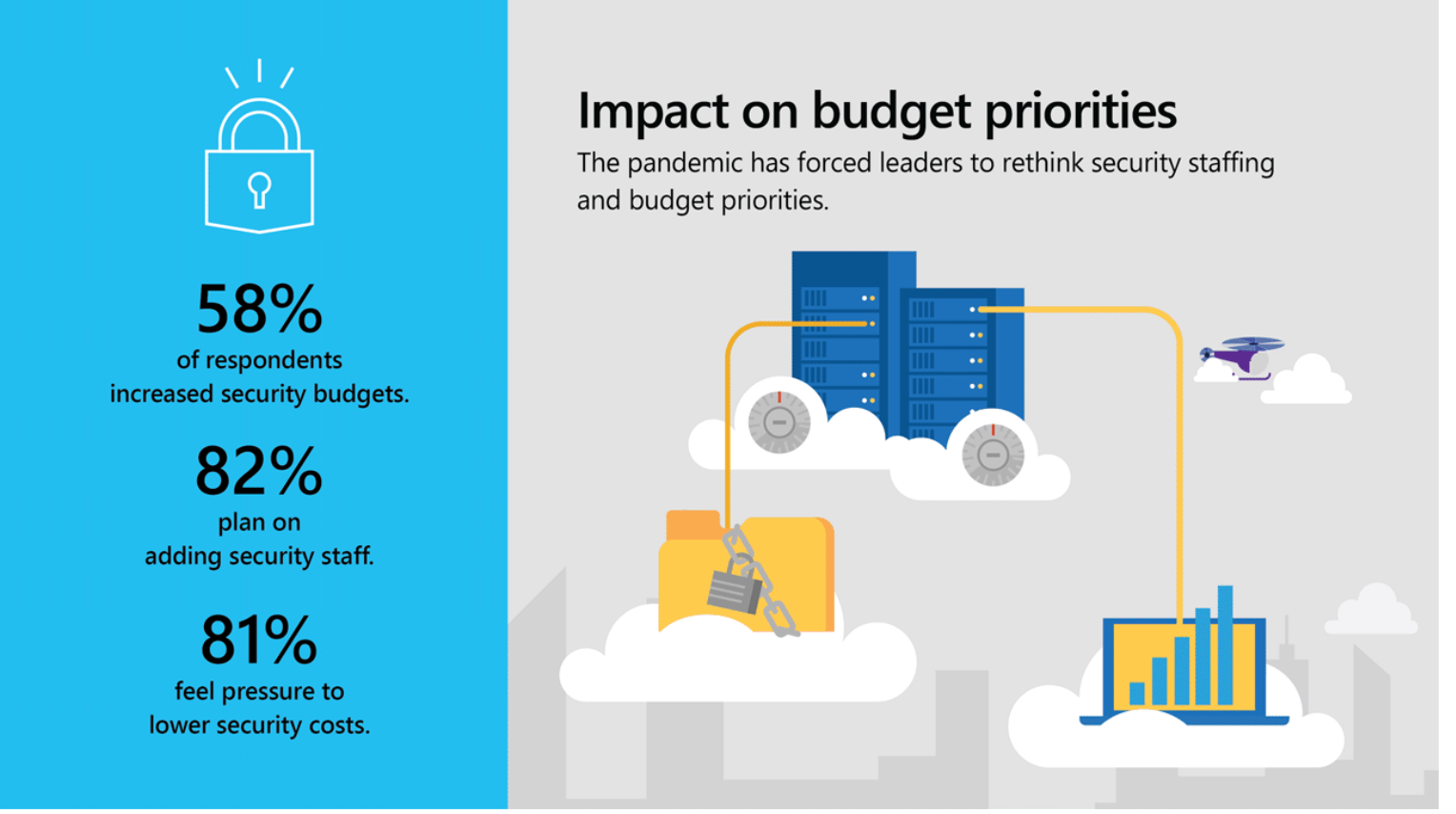
 The importance of cybersecurity in facilitating productive remote work was a significant catalyst for the two years-worth of digital transformation we observed in the first two months of the COVID-19 pandemic. In this era of ubiquitous computing, security solutions don’t just sniff out threats, they serve as control planes for improving productivity and collaboration by giving end-users easier access to more corporate resources. Microsoft recently concluded a survey of nearly 800 business leaders of companies of more than 500 employees in India (IN), Germany (DE), the United Kingdom (UK) and the United States (US) to better understand their views of the pandemic threat landscape, implications for budgets and staffing, and how they feel the pandemic could reshape the cyber-security long-term.


Among the key insights are data showing that an alarming number of businesses are still impacted by phishing scams, security budgets, and hiring increased in response to COVID-19, and cloud-based technologies and architectures like Zero Trust are significant areas of investment moving forward.


Improving Productivity & Mitigating Threats

Security and IT teams have been working overtime to meet business goals while simultaneously staying ahead of new threats and scams. “Providing secure remote access to resources, apps, and data” is the #1 challenge reported by security leaders. For many businesses, the limits of the trust model they had been using, which leaned heavily on company-managed devices, physical access to buildings, and limited remote access to select line-of-business apps, got exposed early on in the pandemic. This paradigm shift has been most acute in the limitations of basic username/password authentication. As a result, when asked to identify the top security investment made during the pandemic the top response was Multi-factor authentication (MFA).


An image showing the pandemic's effect on budgets.

Monday, 17 August 2020

BlueScope Steel enhances cyber security after mid-May attack

 As it shifts focus on its year-old 'Avenir' digital transformation.

BlueScope Steel says it is making “good progress” on cyber security “enhancements” following a ransomware attack in mid-May.

Chief financial officer Tania Archibald told BlueScope’s FY20 results briefing that the attack, which was first reported by iTnews, had been mitigated without “material” impact on its operations and sales.

“Many of you will be aware that in May we experienced a cyber incident which saw unauthorised parties access our network,” Archibald said.

“As a result of our ability to quickly detect and respond to the incident, we experienced no material impact on our operations and sales. 

BlueScope Steel enhances cyber security after mid-May attack

Sunday, 2 August 2020

Cyber skills in traditional security management careers

When I speak with candidates who are either leaving government roles or actively looking for a new role, I am often asked what programs or courses related to cybersecurity they could take to improve their marketability. A one-size-fits-all answer is a challenge because the operational knowledge needed by someone charged with cybersecurity is similarly broad and complex as the various accountabilities of non-technology security risk roles.

The concept of convergence of both roles whereby a single point of accountability leads the strategy and governance for all security risk initiatives can be an effective approach. While the idea has been out there for quite a while, it is still not widely utilized. There are, however, numerous examples of interdependencies that indicate a need to understand the points of vulnerabilities to best provide a cohesive, coordinated effort to limit and/or mitigate security related risks.

Candidates should gain an understanding of all elements that make up the role of a cybersecurity program leader. If they are considering a career development strategy, they can then decide the path they feel is the best personal fit. There are numerous programs and certifications available that range from an executive overview of cybersecurity to those in which you achieve deep technical competencies.

Cybersecurity functional domains can be broadly categorized in eight areas:

  1. Emerging Technologies and Market Trends
  2. Identity and Access Management
  3. Incident and Crisis Management
  4. Information and Privacy Protection
  5. Risk and Compliance Management
  6. Security Architecture
  7. Organizational Resiliency Programs & Assessments
  8. Threat, Intelligence and Vulnerability Management

There are numerous subsets, programs and processes that a CISO has responsibility to develop and execute. Current “Mind Map” models reflect those key topic areas of cybersecurity involvement as:

Business Enablement

  • Mergers/Acquisitions
  • Cloud Computing
  • Mobile Technology
Career Feature image 1

Monday, 13 July 2020

CyberSmart raises £5.5million to fund growth following increased demand for cybersecurity

Demand from SMBs for Cyber Essentials Certification drives growth to 300% per annum

LONDON 13th July 2020:  CyberSmart has raised £5.5 million in a heavily oversubscribed Series A funding round led by VC firm IQ Capital and respected cyber security and tech entrepreneur investors. The funding will be used to fund the growth of the company, which enables small to medium-sized businesses (SMBs) to combat the constant threat of cyber-attacks and increasing regulation in an ever-evolving technological landscape and increasingly connected digital operating space.

CyberSmart has seen a massive increase in demand from SMBs to protect their businesses, with a revenue increase of 300% over the last twelve months. The lockdown period has accelerated the uptake of their cloud-based technology, which is fully automated and can be implemented with the click of a mouse, without a time-consuming visit to a customer’s site.

CyberSmart raises £5.5million to fund growth following increased ...

Sunday, 7 June 2020

Shares in cyber security group soar as digital attacks hit Japan

Shares in a Japanese tech start-up, whose chief executive correctly bet that Covid-19 would unleash a surge of cyber attacks and entrench a corporate prejudice against unlisted companies, have surged more than 670 per cent after pressing ahead with its listing at the height of the mid-March market turmoil.

The explosive rise in the shares of Cyber Security Cloud has given a company with 45 employees a market capitalisation of around $800m. It listed on the Tokyo Stock Exchange’s Mothers board on March 26, days after the benchmark Nikkei 225 Index had racked up losses of 20 per cent.

Monday, 1 June 2020

Cybersecurity the responsibility of agencies, not us, AGD and ASD say

During a hearing held by the Joint Committee on Public Accounts and Audit last month into the cybersecurity resilience of Commonwealth entities, the federal opposition poked holes in current reporting requirements and highlighted a lack of accountability for when Commonwealth entities come up short.

The Australian National Audit Office (ANAO) faced the firing line, with the committee asking why the Protective Security Policy Framework (PSPF) has not been made mandatory for all Commonwealth entities, and why, given they're called the Essential Eight, only the Top Four is looked at.

Cybersecurity the responsibility of agencies, not us, AGD and ASD ...

Monday, 25 May 2020

CYBER SECURITY ATTACKS

“Postal and parcel service providers and leading e-commerce companies handle an increasing amount of operational data and process millions of transactions every day.

Maximum availability of sorter capacity, optimal transportation and increase of customer satisfaction via apps on smartphones where customers can track and redirect parcels in near real time are some of the challenges the CEP market is facing.

Cyber security attacks

Monday, 18 May 2020

Cyber attacks continue to grow in both numbers and ferocity — 2019 was just a sign of the things to come. Here’s your list of 122 of the most current cybersecurity industry, cyber attack, and data breach statistics for 2020 and beyond

Last year, we published our first comprehensive list of cyber security statistics for our readers on Hashed Out. The article was such a hit that we wanted to make this an annual project that we publish with updated cybersecurity stats each year. This way, you know right away where you can turn for all of your cyber security data needs.

cyber security statistics graphic representing BEC / EAC scams

Monday, 11 May 2020

Economic Impact of COVID-19 on Global Cyber Security Market

The global cyber security market is forecast to grow at a slower average rate of 6.2% per year to 2023 due to the economic consequences of the coronavirus pandemic in 2020.

The cybersecurity market grew strongly to 2019 due to strong underlying factors including the continued cyber threat and changing attitudes to risk driven by a combination of regulation and improved awareness. Additionally, the growing global economy provided the capital for organisations to invest in new digital processes and the security needed to improve resilience. These interrelated trends, coupled with the low level of security market saturation, sustained industry growth as enterprises invested in new tools and managed security services. The high growth rates are supported by the analysis of 46 cybersecurity technologies and disciplines, 39 of which are still at an early stage in their product lifecycle, characterised by high growth, low customer saturation and large supplier ecosystems. This has led to high levels of private investment in start-ups and delisting of large public cybersecurity suppliers as private equity targets returns from emerging, high growth technology segments.

Coronavirus (COVID-19) | NautaDutilh

Monday, 4 May 2020

SEL and University of Idaho Launch $2.5M Cybersecurity Partnership

Cybersecurity education and research in the Pacific Northwest is receiving a $2.5 million infusion due to a partnership between global power systems protection leader Schweitzer Engineering Laboratories (SEL) and the University of Idaho College of Engineering.

The five-year partnership will expand U of I’s cybersecurity education and research through direct program support and contracted research projects focused on developing inherently cyber-secure industrial control systems.

Data Stream

Monday, 27 April 2020

Microsoft Teams fixes funny Gifs cyber-attack flaw

A security problem in Microsoft Teams meant cyber-attacks could be initiated via funny Gif images, researchers have revealed.

Like many chat apps, Teams lets colleagues send each other whimsical animated Gif images.

But CyberArk researchers discovered a problem that meant viewing a Gif could let hackers compromise an account and steal data.

A man laughs at something on his phone while working from home in this photo

Sunday, 12 April 2020

Schneier on Hacking Society

How the hacker mindset and skill set could play a role in improving and securing societal systems, according to renowned security technologist Bruce Schneier.

What if security experts could take a crack at fixing the huge and unwieldy US tax code, or ensuring that legislation gets written without inadvertent or deliberate loopholes?

Bruce Schneier (Photo Credit: Vivian Babuts)

Tuesday, 7 April 2020

Tips to avoid Zoom hacking when working from home

PEMBROKE PARK, Fla. – Zoombombing: It’s a term you probably didn’t know you had to worry about until recently.

But with social distancing recommendations forcing so many of us to work from home during the coronavirus pandemic, Zoom conference calls have become the latest target for hackers.

“With more Floridians than ever before working from home and holding virtual meetings, a new trend called Zoombombing is emerging,” Florida Attorney General Ashley Moody said in a news release Monday. “Zoombombing occurs when hackers hijack internet video conferences, like those offered by the fast-growing platform Zoom. These hackers often present inappropriate, offensive material or otherwise disrupt the conference.”

Florida Attorney General Ashley Moody provided a list of tips to avoid having your Zoom meetings hacked.

Cyber Security in the Context of International Security

 Cyber security is everyone’s responsibility. What are the current trends in threats, risks, and vulnerabilities? How do threat actors explo...