Sunday, 28 January 2018

Data-stealing spyware 'traced to Lebanon'

A security bug that has infected thousands of smartphones has been uncovered by campaign group the Electronic Frontier Foundation (EFF).

Working with mobile security firm Lookout, researchers discovered that malware in fake messaging designed to look like WhatsApp and Signal had stolen gigabytes of data.

Man with mobile

Sunday, 21 January 2018

15-Year-Old Schoolboy Posed as CIA Chief to Hack Highly Sensitive Information

A notorious pro-Palestinian hacking group behind a series of embarrassing hacks against United States intelligence officials and leaked the personal details of 20,000 FBI agents, 9,000 Department of Homeland Security officers, and some number of DoJ staffers in 2015.

Believe or not, the leader of this hacking group was just 15-years-old when he used "social engineering" to impersonate CIA director and unauthorisedly access highly sensitive information from his Leicestershire home, revealed during a court hearing on Tuesday.

Sunday, 14 January 2018

Blackberry Hack: When Hackers Used The Site to Mine Cryptocurrency

As cryptocurrency spread its roots globally, the ways of illegally earning or ‘mining’ it are also becoming advanced and much more sophisticated.
Blackberry mobile’s website recently became a victim when hackers used it to illegally mine cryptocurrency.
With Bitcoin and other cryptocurrencies gaining popularity, hackers are finding newer ways to mine. They have now started to hack website and use servers to mine digital currency.

Sunday, 7 January 2018

Spectre and Meltdown processor security flaws – explained

What are Meltdown and Spectre? Do they only affect Intel chips? Will the fixes slow my computer … and what even is a processor?

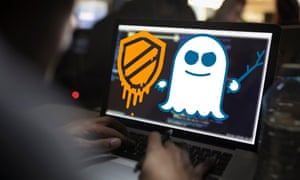
Meltdown and Spectre are the names of two serious security flaws that have been found within computer processors. They could allow hackers to steal sensitive data without users knowing, one of them affecting chips made as far back as 1995.

Meltdown and Spectre logos overlaid on computer screen

Sunday, 31 December 2017

2017 in Tech: The Year of Foreshadowing Big Things to Come

2017 may be the year that developments in the tech world truly were overshadowed by other world events: deepening divisions in the United States and the looming threat of war with North Korea; numerous high-profile Hollywood players, TV personalities, politicians, journalists, business executives and others involved in sexual misconduct scandals; terrorist attacks in Europe and elsewhere; and the announcement of yet another royal wedding in the United Kingdom, to name just a few.

With all of that going on, it would be easy to overlook Apple's introduction of another iPhone or Nintendo's comeback with a hit video game console. The truth is that 2017 could be what sports teams often call "a rebuilding year."

2017-tech-trends

Sunday, 24 December 2017

Security Researchers prove that Windows 10 Facial Recognition can be breached with a Photo

Their spoofing attempts were declared on the cybersecurity site Seclists on Dec. 18. The cybersecurity experts bypassed Windows Hello which is Microsoft’s password-free security Lock on both a Dell and Microsoft laptop operating different versions of Windows 10, which is the reason for concern for anyone utilizing this feature to log into their account.

Saturday, 16 December 2017

Bitcoin ‘Phishing’ Attacks On The Rise As Price Goes Higher And Higher

After Bitcoin’s price goes higher and higher and has climbed from $11,000 on Monday to almost $17,500 on Sunday, phishing attacks on Bitcoin wallets increased, according to CheckPhish, which is a service that keeps track of new phishing pages against popular companies.
According to CheckPhish reports, five domains have been recognized which were attempting to mask themselves as the Blockchain wallet service. Similar bitcoin phishing activity has been reported by others.

blockchain-phishing

Cyber Security in the Context of International Security

 Cyber security is everyone’s responsibility. What are the current trends in threats, risks, and vulnerabilities? How do threat actors explo...